If you’re struggling to reach your customers, to tell them about your product or service, you’re probably focussing on the wrong issue.
First, you need to understand precisely what problem you solve… for who… and how you do that, consistently… which will enable you to figure out how best to reach them so that your message lands.
Scalability is not the same as growth. Scalability proceeds growth as it is the process of preparing the business to handle increased workload and customer demands without compromising performance or incurring excessive costs.
One of the best indicators of a scalable business is to see if they grow not only revenue, but profitability too, as their costs don’t rise in tandem with their revenue increase.
Introduction: Building a successful business is akin to our personal development journey. Just as we evolve from infancy to adulthood, our businesses must also adapt and grow to support their expanding needs. Relying on the same foundation that launched your business may hinder its potential for growth. To avoid adverse outcomes such as being trapped in the day-to-day operations, losing customers, team members, and suppliers, and stagnant growth, it is crucial to embrace the concept of building while you fly. In other words, as your business takes off, you must continuously improve and upgrade your infrastructure to soar higher and achieve sustainable growth.
Evolving with the Right Chassis: Similar to our musculoskeletal system adapting to support our growth, your business needs a strong foundation that can accommodate its expanding size and ambitions. The chassis that served you well during the initial stages may not be suitable for long-term growth. By recognizing the need for a more robust infrastructure, you can build it out to operate independently of you and thrive beyond your individual efforts.
Escaping the Life of Firefighting: Failing to build while you fly often leaves you in a never-ending cycle of firefighting. You find yourself constantly addressing urgent issues, unable to focus on strategic growth initiatives. By investing time and resources into building a solid foundation, you can release yourself from the daily operational challenges and gain the freedom to concentrate on driving your business forward.
Safeguarding Customers, Teams, and Suppliers: If you don’t evolve your business, it can have detrimental effects on your relationships with customers, team members, and suppliers. As your competitors adapt to changing market demands, you risk losing customers who seek innovative solutions elsewhere. Additionally, without a scalable infrastructure, your team may become overwhelmed, leading to disengagement or turnover. Suppliers, too, may be hesitant to collaborate if they perceive your business as stagnant. Building while you fly ensures that you retain these crucial stakeholders and foster long-term relationships based on growth and mutual success.
Embracing a Virtuous Cycle of Growth: Stagnant growth can create a negative feedback loop, draining your business of vitality and potential. On the other hand, building while you fly establishes a virtuous cycle of growth and confidence. By consistently investing in your business and upgrading its capabilities, you attract the right opportunities and talent, further fuelling your growth trajectory. This cycle fosters an environment of continuous improvement and optimism, empowering your business to reach new heights.
The 9-5 Operation and 5-9 Investment: To successfully build while you fly, it is essential to strike a balance between day-to-day operations and investing in future growth. The traditional 9-5 work schedule may fulfil immediate responsibilities, but dedicating the 5-9 time slot to strategic planning, skill development, and innovation is equally crucial. By allocating time outside regular working hours to invest in your business, you can unlock numerous benefits.
Benefits of Building While You Fly:
Sustained Passion: By embracing the mindset of building while you fly, you remain enthusiastic about your business, constantly discovering new facets of yourself, your industry, and its potential.
Increased Efficiency: Investing time in growth-oriented activities allows you to optimize processes, improve productivity, and streamline operations, resulting in time saved that can be redirected toward expansion.
Competitive Advantage: Remaining proactive and forward-thinking positions your business on the front foot, ready to seize opportunities and adapt to industry shifts, enabling you to attract the right collaborators and stay ahead of the competition.
Sustainable Growth: Building while you fly propels your business toward sustained growth and success, as you continuously upgrade your infrastructure, attract new customers, nurture your team, and forge stronger partnerships. Building while you fly is a critical concept for achieving sustainable growth in your business. By acknowledging the need for ongoing evolution, you can avoid stagnation and unlock your business’s full potential. Escaping the life of firefighting, safeguarding valuable relationships, and fostering a cycle of growth and confidence are the rewards of investing time and resources into upgrading your infrastructure. Embrace the 9-5 operation and 5-9 investment approach, and you will witness your business soar to new heights, driven by continuous improvement and a passion for progress.
Pavlo recently had a valuable conversation that highlighted the common challenges faced by many business owners. One crucial aspect that determines the effectiveness of your business in terms of competition, scalability, growth, and industry dominance is how you position it.
Here’s the context: the business in question deals with second-generation door and window frames, and it has been operating for three generations. The owners have been blindly loyal to their suppliers, but they are experiencing a decrease in customer loyalty. Additionally, they are grappling with an aging workforce and the absence of apprenticeships and artisanal skill development.
The business has hit a growth ceiling, and what makes matters more pressing is the fact that the average age of competitors across the industry is approaching 61. This poses a challenge as the business needs to grow to combat inflation and secure retirement and pensions for the third generation, who are constantly uncertain about the future.
The owners are aware of what needs to be done to foster growth, but they find themselves lacking the time to dedicate to it. Their daily, weekly, and monthly operations are the center of their attention.
To overcome these challenges, the resolution lies in repositioning the business. The following steps should be taken:
Position: Clearly define the business and its core focus. Determine precisely who you serve, and what experience you provide in delivering your solution to them.
Build a system of delivery that codifies every action and step that enables that delivery, consistently.
Do it with your team: Acknowledging that growth cannot be achieved alone, they engaged their team in the decision-making process. By leveraging collective knowledge and expertise, they instilled a sense of ownership and commitment, inspiring everyone to work towards a shared goal.
Release your time: Recognizing the value of the business owner’s time, they delegated and automated tasks that could be handled by others. This freed up time for the owner to focus on growth strategies, explore new opportunities, and build connections with industry leaders.
As the business owner, you need to ask yourself, “What is your job”? In our door and window frame company example, the business owners shifted from being immersed in daily operations to becoming leaders. Guiding and inspiring the team towards achieving growth objectives became their primary focus. To get this right, take a leaf out of their playbook:
Start: What business are you in? Revisiting their core purpose, they identified the specific niche within the door and window frame industry where they aimed to excel. This allowed them to differentiate themselves and concentrate efforts on areas with the greatest growth potential.
Build – create a chassis to support growth: By decoding what they did and how, they established a solid foundation to develop apprenticeships and skill development initiatives to attract and nurture new talent, ensuring a sustainable workforce for the future.
Grow and lead it: The business owner took the lead as the driving force behind the company’s growth. Actively seeking expansion opportunities, exploring strategic partnerships, and embracing innovation became their mantra to stay ahead of the competition.
Sell and package it: Understanding the value of their business, and with a system and team in place that showed potential buyers the sustainability and growth trajectory, the owners have built the business into an asset that functions without them in it, and thus can be succeeded or sold.
Positioning your business effectively is crucial for competition, growth, and industry dominance. The experiences and challenges faced by this door and window frame company underscore the significance of strategic decision-making, fostering a growth-oriented culture, and adapting to changing market dynamics.
In today’s uncertain and evolving economy, scaling and dominating your industry require more than just a great product or service. It demands a combination of a resilient mindset and a resilient business model.
Resilience is the ability to persist and stay proactive despite challenging circumstances. By cultivating the right mindset and implementing a robust business model, entrepreneurs can navigate the ever-changing landscape and achieve long-term success.
The Power of a Resilient Mindset: A resilient mindset is the foundation for overcoming obstacles and staying ahead in the game. It is an attitude that governs your behaviour and shapes your response to adversity. Developing the following mindsets is crucial for sustainable growth:
Operator Mindset: Embrace the day-to-day grind and persistence necessary for success. It grants you control over shaping and crafting your business.
Growth Mindset: Continuously seek opportunities for improvement and learning. Be open to innovation and adaptability, always striving for growth.
Winning Mindset: Cultivate a positive outlook and a belief in your ability to succeed. Maintain a determined attitude and approach challenges as opportunities for victory.
Investor Mindset: Think strategically and long-term, weighing risks and rewards. Make decisions that align with your vision and attract investment.
Building a Resilient Business Model: A resilient business model is the blueprint for translating effort into economic success.
Conventional wisdom suggests focusing on product or service excellence, establishing functions, recruiting to enable those, and then growing by adding new products or markets.
The Asset of Value approach offers a more customer-centric perspective:
Define Your Target Market: Understand the specific customers you serve and their needs. Tailor your offerings to solve their problems effectively.
Customer Experience Focus: Prioritize creating an exceptional customer experience throughout the client journey. Differentiate yourself by delivering that experience consistently in a way that differentiates you from your competitors.
Design in Collaboration with Your Team: Engineer your business model together with your team. Delegate leadership roles and foster a culture of collective responsibility and growth.
Lead Growth: As the business owner you have to lead your business’s growth and ensure that growth doesn’t dismantle your system of delivery. Maintain a consistent level of service quality as you expand and enter new markets or add new products.
Combining personal resilience with a robust business model maximizes your efforts and drives economic success. By staying adaptable, continuously improving, and keeping your customers at the centre of your operations, you position yourself for exponential returns and long-term sustainability.
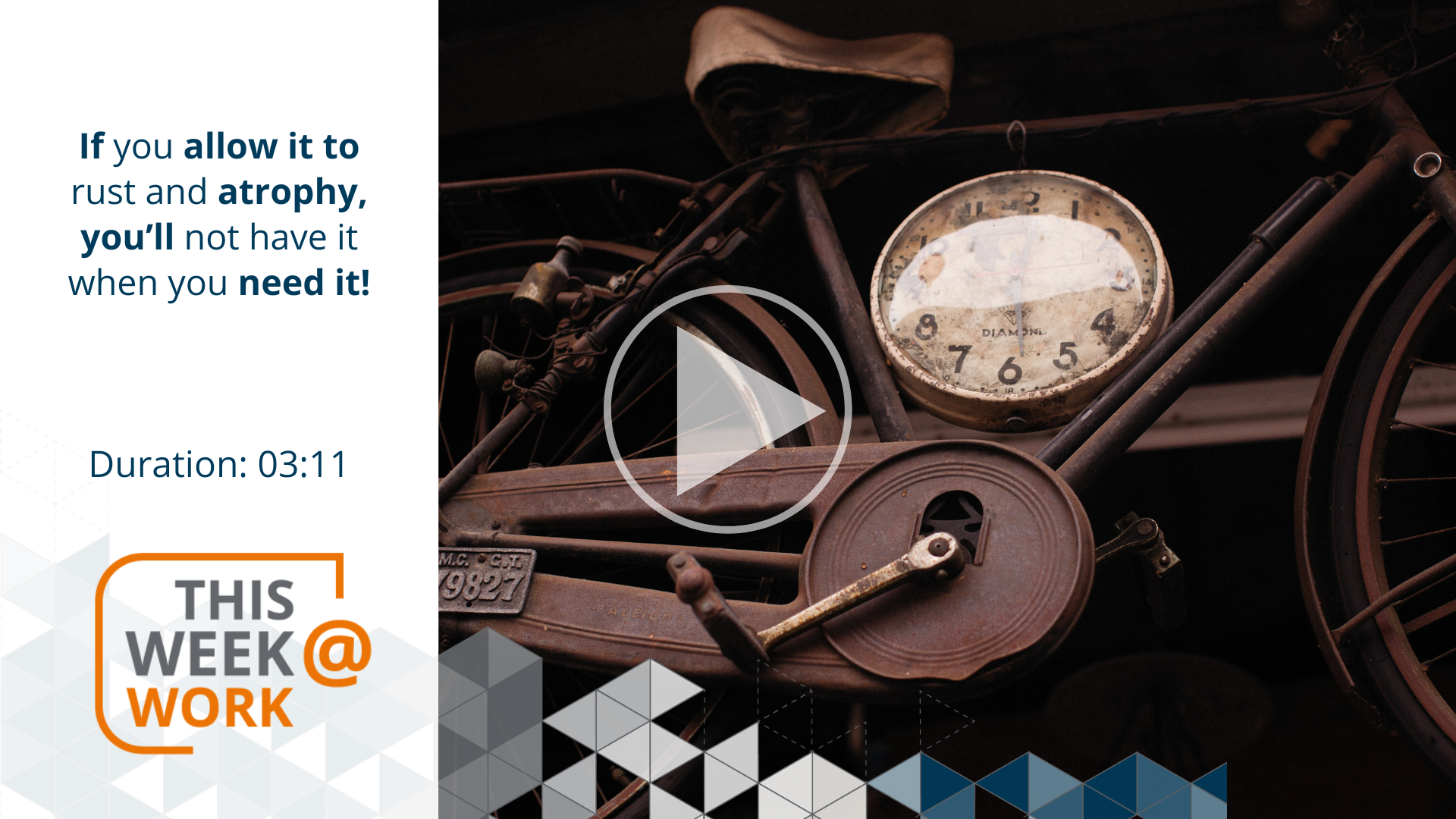
This Week@Work, a rusty bike chain made Pavlo think of Zig Ziglar, who started out as a door-to-door salesperson.
Zig understood the art of hunting for business, something that most business owners have gotten rusty at since we started to rely on digital media to bring business to our door.
This Week@Work at a large gathering of business owners the discussion centered on where to find growth in low or no-growth business environments.
Watch as Pavlo shares three points on what you need to do, and where you need to look to find the opportunities in such circumstances, to get ahead of your competition.