Business Day TV

WATCH: Pavlo Phitidis and Aurik business owners represent the SME voice on Business Day TV

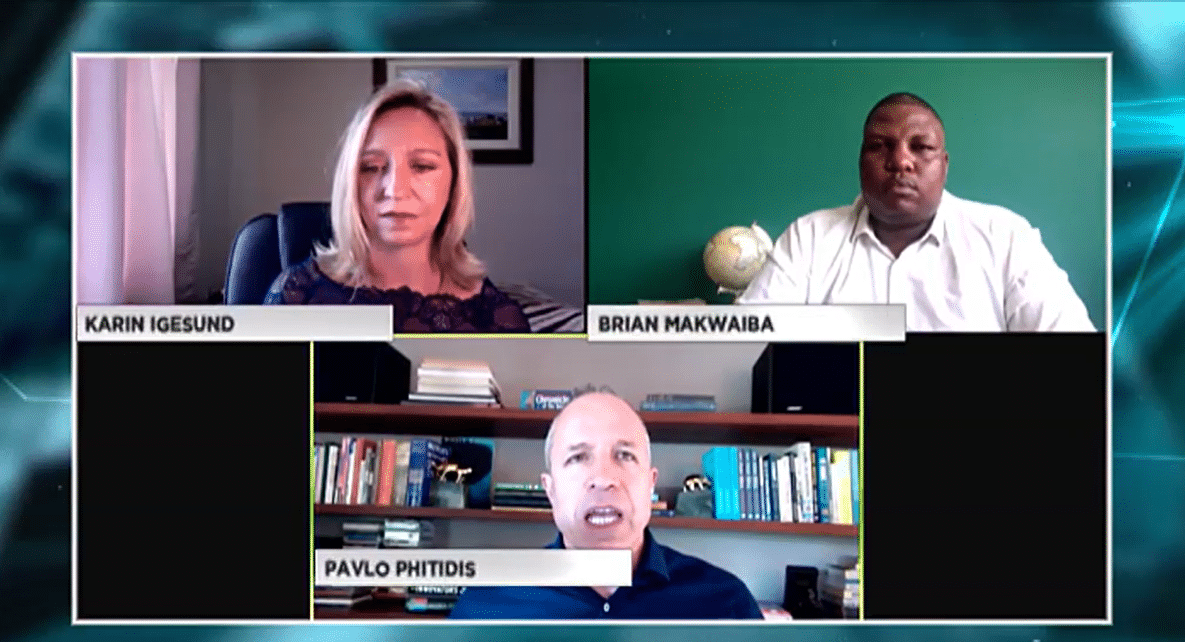
Pavlo Phitidis was asked to update Michael Avery of Business Day TV on the SME landscape in South Africa.

He invited two businesses that Aurik has worked with, to highlight his points about how entrepreneurial mindsets overcome crises all the time in business. Listen to what Karin Igesund from Packtown, and Brian Makwaiba from Vuleka Platform had to say about how they Reset Rebuilt and Reignited their businesses through this latest crisis: the Covid lockdown.

https://www.businesslive.co.za/bd/companies/2020-11-18-watch-smes-the-missing-piece-of-the-sa-investment-puzzle/


profitable customers

SELECTING & SECURING PROFITABLE CUSTOMERS

Knowing how to focus your sales efforts on the most profitable customers can accelerate the growth of your business exponentially. It is a critical exercise because, with limited resources on hand, you need to focus your efforts, to maximise your impact and build your business’ momentum. On The Money Show with Bruce Whitfield, Pavlo Phitidis outlined a useful technique for positioning your business:

KNOW YOUR CUSTOMER

As the owner of a growing business, you may feel tempted to try and be everything to everyone. This impulse is rooted in wanting to generate an income as quickly as possible, but it’s never a good idea to try and solve every problem, for every potential customer that comes your way. Finding, and knowing, the customer that you are best suited to serve, and who would be most profitable for your business, is vital.

A TECHNIQUE FOR POSITIONING YOUR BUSINESS

We used this technique with a group of technology entrepreneurs and, through it, you’ll be well equipped to find the right kind of customer for your business, and solve their specific problems. This technique will help you to build your business to be customer-centric, rather than product-centric, by positioning your business correctly. To showcase this technique, we’ll focus on the product of a tin of baked beans.

1. UNDERSTAND THE ESSENCE OF YOUR PRODUCT OR SERVICE

Undertaking an in-depth analysis of your product will help you to better understand and define its capabilities and suitability for customer groups. Create a brief, feature-filled definition of your product, isolating what it can and cannot do, what it looks like and how it works. If we look at a tin of baked beans, we may ask the following questions: What does the tin look like? How many beans are in each tin? What do these baked beans taste like?

2. DEFINE THE GROUPS OF CUSTOMERS YOU COULD SERVE

Once you understand your product, look towards discovering the types of customers it can serve. Define who the people are that your product can serve, by detailing their demographics; lifestyle; likes; dislikes, and needs. We’ve outlined four definitive customer groups who may enjoy or eat our tin of baked beans:

  1. A mom with 6 kids
  2. A competitive athlete
  3. A busy business executive
  4. An artisan worker

3. UNDERSTAND THE PROBLEMS THAT THEY EXPERIENCE THAT YOU CAN SOLVE

Each of your defined customer groups will have unique problems they face, that your product could solve. These are some of the unique problems each of our chosen customer groups may face:

  1. Mom: needs our tin of baked beans to stretch as far as possible, and for it to be easy to use when her children are hungry.
  2. Athlete: needs a healthy, high-protein meal, that has muscle building capabilities.
  3. Business Executive: needs a convenient, on-the-go meal that’s nutritious and easy to make.
  4. Worker/Labourer: needs a filling, hearty, energy-boosting meal.

 4. PLOT YOUR CUSTOMER GROUPS ONTO A MATRIX

Plotting your customer groups onto a matrix may sound complex, but it’s really a simple, four-block graph, that helps you to define your most profitable customer group. You’ll assign your customer groups into each quadrant by showing which group:

Has high or low profitability: Which of these customer groups can I serve immediately, with the product I have right now? How useful is my product to them?

Has a few, or many, members: How many of these customers are out there?

Through this, you’ll discover your ideal customer: the most reachable and most immediately profitable customer will be in the top right quadrant. For our tin of baked beans, that turns out to be the Business Executive.

5. CRAFT YOUR MARKETING AND SALES MESSAGES TO FOCUS ON THE TOP RIGHT QUADRANT

You can now focus your marketing strategy and messaging on your most profitable customer group, and find ways to communicate with them, in line with your business positioning.

6. BE DISCIPLINED, FOCUS AND PERSIST

Focus most of your marketing effort and budget on your most profitable customer groups, and remember that persistence is the key to momentum. Wealth, and the development of a successful business, is a cumulative exercise and not an overnight task. Once you’ve established a solid marketing effort that focuses on your ideal customer, you can look at apportioning some marketing effort towards the other customer groups, and perhaps even think about new product developments that may serve them best.

Do you need help with figuring out your ideal customer is, or positioning your business correctly? Aurik can assist, as we work alongside you to build your business into an Asset of Value.


turn talk into walk

TURNING THE TALK OF YOUR BUSINESS STRATEGY INTO THE WALK OF EXECUTION AND RESULTS

While the big ideas and the talk of business strategy seems easier to do, the walk of action and executing on those ideas is a struggle. On The Money Show with Bruce Whitfield, Pavlo outlines the obstacles that could be holding you back as a business owner, and how to overcome them:

PROCRASTINATION

You may have the big business strategy, the great idea, the gigantic goals, and the inspiration to attain them, but procrastination holds you back. Set too big a goal, and you may be overwhelmed by them, effectively preventing yourself from achieving any! Instead, break your big goals and idea into many small steps and then begin climbing that ladder – one step at a time. This will enable you to build momentum.

Don’t let your obsession with perfection hold you back from attaining your objectives – start with smaller goals and work your way through them, to achieve a sense of progress. With just 3 economic months left before the end of the year, you need to act and the best way to do it is to begin.

Also, holding back on action because you are waiting for a big project to land, environmental circumstances to change, or you’re concerned you will fail, won’t get you anywhere. Truth is found in action, so start acting, now.

IF YOU WANT SOMETHING DONE PROPERLY, DO IT YOURSELF

Letting go of control over the small tasks that make your business work, is imperative when you’re working on executing your business strategy. Building your business through effective delegation is important for growth, and where that has failed, look more towards hiring people as operators, and not just to fill a job vacancy. Moreover, if staff performance seems to be dwindling, look at your performance measurement systems, and re-assess how well they are working.

SILVER BULLETS

There are no silver bullets in business. Yes, you could hire new people, acquire new premises, find a new funder, or buy new equipment, but those aren’t going to generate action all on their own. Put aside the idea of a silver bullet saving your business, and set your mind towards action, rather than looking for a silver bullet.

EGO AND PRIDE

If you’re frustrated by a lack of progress in your business, and battling to implement your business strategy, it’s time to put your pride in your pocket and pack your ego away. Asking for support, help, or guidance, is not a sign of weakness; it’s a sign of strength and willingness to move beyond your current circumstances. More and more big businesses across the globe are re-assessing their business strategy and moving towards focusing on their core objectives – you should too. Outsource things that aren’t your primary business objective or area of specialization and look long and hard at the goals you want to achieve.

TIMING

The phrase “it’s not the right time” is an all-too-common excuse for delaying your execution of business strategy. Just get started! Of course, it can be difficult to measure and assess your leadership and direction in your business, especially at first, but remain cognizant of your business journey. Look for and find your business’ pattern of growth, while you focus on the objectives for that phase of your business journey.

At start-up stage, you should be focused on learning and understanding what business you’re in, defined only by the problems your business intends to solve for its customers. Moving on from that, building the business beyond yourself means you’ll need to change your leadership strategy, and lean more on implementing systems that will support your business strategy, while hiring the right people to work with those systems.

EXHAUSTION

We live and work in unsettled times, beleaguered by uncertain economic circumstances and a seemingly overwhelming barrage of bad news. This level of uncertainty is the new normal. Rather than allowing yourself to become despondent because of it, focus only on the things you can act on, control, and make happen. Focusing your energy on what is useful to you will help you to find the energy to keep moving, stay on track, and build your business. Developing a fitness for this new normal of uncertainty will mean you’ll be able to build your business, no matter what the external circumstances look like.

lock and load your business now

ACT NOW TO REGAIN CONTROL OF YOUR BUSINESS, AND GET AHEAD IN 2021

For many businesses, the Covid-19 lockdown undermined all the plans we had made for 2020. While we don’t know what lies ahead in 2021 or beyond, this is all the more reason to build our  businesses to thrive in uncertainty. Join business growth specialist Pavlo Phitidis for a 60-minute discussion where he will outline a proven methodology to build a business to deliver more revenue, profit and time, irrespective of the external circumstances.

Leave with practical insights into how you can:

  • Position your business for relevance to existing and new markets
  • Build dependable marketing, sales and operational systems
  • Focus and empower your teams to ensure performance
  • Spend more time leading rather than doing
  • Accelerate growth of revenue and profitability
  • Build the 3 levers of value to maximise exit when you get there

Date: Wednesday 18th November 2020

Time: 08h00 to 09h00 

Register HERE

engineer

Engineering and creative mindsets that build and break businesses

Building a business without either the ability to fix something or create something (preferably both) is truly hard.

An engineering ability, using math’s and science to solve problems and/or a creativity ability, the tendency to generate, possibilities and alternatives to solve problems are key talents that enable a business to attain validity. Afterall, a business exists and sustains by solving problems for customers!

Without these skills, its hard to make a business happen. However, if these skills are not contained and directed as a business grows, the business will simply become a job for its creators and never build into an asset.

Listen to the podcast of Pavlo Phitidis’ discussion about these business mindsets, from The Money Show on 702 & CapeTalk:


What is the difference?

A job is something that operates only with you at its center and meets only 1 of the three criteria of an asset.

An asset has three criteria. Capital/equity value that can grow, income value that can grow and tradability to allow its sale so that the capital value can be realized.

How do these talents/skills need to be directed over time

All businesses go through a development cycle. Usually, this is determined by time. You start, build, grow, accelerate, reach prime, mature and decline. For the average business, in fact for the majority of businesses, they start, build, grow and then move into a repeating cycle of build-grow into perpetuity before they close.

Often, the guilty party enabling this is the exact talent that enabled the startup – the engineer/creative.

Why does this happen?

Psychologically, this talent finds meaning in solving or ideating solutions to problems. There is a thrill and ego bump every time it happens. It can be and often becomes addictive to the point where many business owners are not even aware that this is operating.

Talent in engineering/creative abilities create unlimited timelines. Because you can fix things and do so repeatedly, you can always start again, do it again, recover again after the last effort. This puts you in a position where you can earn income repeatedly because of your talent so you simply just continue.

The talent does not get redirected and channelled differently. In as much as it takes an engineering/creative talent to solve a problem, the exact same talent is required to build a business. Think about what a business is – it is a legal person, that contains systems and operators that serve customers by solving problems for value through a commodity or service. To start you need to have a commodity to trade – a product/service. To grow, you need to wrap it into a business.

From a Job to an Asset

The redirection of these talents needs to come at a point where you can delegate responsibilities to your employees. To get this right, you need a simpler business, that can be driven by systems and enabled by people. Delegation is impossible without a system and a system cannot be built reliably if the business is trying to be all things to all people.

The building industry is a great example as is the advertising industry.

Less is more and simplification is key. Understanding this lets an engineer or a creative redirect their talents away from product or service solutioning to building the commercial wrap to take the product or service to market without them.

This business is no longer a job and now is an asset. A buyer looks and will find capital, income growth and to make it all tradable, independence of you!

wealth

Creating wealth through your business

Wealth describes an abundance of a desirable thing. It could be friendship, love, money, access to a foodstuff and so on. From the context of a Business Owner, what does wealth mean and how do you create it? In conversation with Bruce Whitfield on 702 and CapeTalk, Pavlo Phitidis defined the three components of wealth creation in the context of a private business.

BEFORE WE BEGIN, THINK ABOUT MONEY AS WATER

You are simply the custodian of it for a period. When you make it, you either store it or use it. Stored water eventually evaporates or stagnates. Used money is either wasted or generates more value for you.

In this context, a business should be built as a perennial spring. Well designed and built, it should produce water consistently. Your use of that water should be well considered. Fertilise and feed productive lands that bear fruit. Bad investment decisions see the money made lost like watering barren soil with old seed.

MAKE MONEY

Money in a business takes two forms:

FREE CASH

Money in a business sustains and grows the business. the money made needs to cover all your expenses. Thereafter, you pay yourself a salary to sustain yourself and your family. Any money left is profit, which should come to you as dividends or be used to invest in the business to accelerate money-making. This free cash can also be used to deepen the value of the business to generate future money. This happens by increasing the value of the business’s equity.

EQUITY OR CAPITAL

Equity holds the promise of money. It is in the value of the business should you decide to sell the business. Built right, a business can be sold and for a premium value to generate a capital gain. This will be the difference between the cost of your initial investment to establish the business and the price you sell it for.

As a business owner, you can build a business to either make money or grow equity or both. To get this right, you need to build your business into an Asset of Value. This is a business that has the following criteria:

  1. It has a good strategy that sets it apart from competitors
  2. It generates steady, reliable sales
  3. It has a well-organised delivery capability
  4. Its people are purposeful and motivated
  5. Banks and funders love it. It’s saleable at a premium price on a clean transaction

Building your business into an Asset of Value will see revenue grow at a higher rate than your costs. This gap generates the free cash to make money in the business.

GROW YOUR MONEY

With money made, you need to now make it work for you by growing it.

You can grow it in your business. by making smart investment choices. This might mean an investment into plant and equipment or people and software etc. Many business owners make their biggest mistakes here. Knowing how to invest in your own business is not as easy as it sounds. You can also invest outside of your business into stocks, bonds, shares and other assets. In all cases, these investments must make money for you.

PROTECT YOUR MONEY

Get smart with insurance and tax management. Insurance, as annoying as it can be, protects you from probable and improbable risks. Imagine, for example, your fleet of trucks gets written off in a fire, without insurance to fund the replacement fleet. It will set you back years if not permanently. Also, some investment products serve to protect money drains like tax. You can legally manage your tax rate down on a personal level by investing in retirement annuities for example.

Wealthy people did not get there in a single generation. Nor did they get there through one activity. Sure, we read about some business people who cracked it and got lucky in a single generation, but they are, by far, the exception. Strategy and habit are what builds wealth. Strategy means being clear on how to make, grow and protect your money. Habit is doing and behaving in this way ove


Reset Rebuild

RESET REBUILD REIGNITE ROUNDTABLE WITH PAVLO PHITIDIS AND THE GOOD THINGS GUY

Starting this Global Entrepreneurship Week, Reset, Rebuild and Reignite your business to win in the new year and beyond.

Join business growth specialist and author of Reset Rebuild Reignite, Pavlo Phitidis for a roundtable discussion on how to build a business that is not only resilient to crises, but takes advantage of the changes that they present.

Pavlo will be joined by Brent Lindeque, The Good Things Guy, whose mission it is to find the positives amid the negative. Pavlo and Brent want to discuss resilient mindsets that can turn challenges into opportunities, and they want your stories to unpack.

Tell us what you did to survive the Covid lockdown – or any crisis that faced you or your business – and you could earn your seat on the panel to discuss your  challenges and opportunities. Or just register to listen to the discussion and learn from those who have endured and come out winning!

The discussion will take place on Wednesday 18 November 2020 at 12h00 

It forms part of Global Entrepreneurship Week, and Bargain Books is offering 25% off all copies of Pavlo’s books: Sweat Scale $ell and Reset Rebuild Reignite for the week, 16 – 22 November.

Register HERE

Kevin vanDam

KVD: A FISHERMAN’S TALE

American Kevin VanDam is one of the top-ranking bass fishermen in the world with two Major League Fishing Cups, four Bassmaster Classic titles, seven Toyota Tundra Angler of the Year titles and eight Angler of the Year titles under his belt. His winnings amount to millions of dollars and he is the beneficiary of major sponsorship deals. In this blog, we take a look at the secret of his success.

WHAT SETS THE TOP INDIVIDUALS APART?

Being at the top is a numbers game and bass fishing is no different to any other industry. All top sportspeople require talent, motivation, dedication and tenacity, but just like every other highly competitive sport, what separates the top players is a matter of percentages. Just as at the top level of professional sports every individual fulfils the minimum requirements of skill and practice, to rise to the top in any industry you need to gain the advantage where you can.

A NUMBERS GAME

“If you want to be the best, you have to do things that other people aren’t willing to do.” – successful Olympic swimmer Michael Phelps

There is little that separates the top players, so gaining the advantage is a matter of maximising what might seem to be minor elements. There are many variables with bass fishing including currents, wind, sunshine and landscape. Kevin VanDam ensures that he always has the advantage. He makes sure that he gets the best locations by visiting them ahead of time and assessing the terrain. He ensures he will be the first to claim the prime spot because he has the fastest engine in his boat. And he is better equipped than the competition because he has more rod racks and a wider range of lures.

Kevin VanDam also does something else that few others do: He invests in a coach. His coach provides alternative perspectives – from assessing the terrain of a lake where the season’s competitions will be held to consultations on lure choice and the rod actions that he practises. VanDam uses his coach to build trust in his approach, process and attitude and prevents himself slipping into doubt or a deep blue funk. In fishing, as in building a business, a few consecutive small failures have a tendency to do that.

“Becoming the best and staying the best means you need someone to talk to who understands your challenges and the pressure of competition. They help maintain perspective and prevent me slipping into habits or behaviours that prevent winning.” – Kevin VanDam

Success in sports and in every industry and business depends on many factors including having the right attitude, passion and motivation. But these things alone are not enough in a highly competitive environment. Insight is required to work the percentages and gain the advantage. If you’re not sure how to start, then get the right support. Aurik could just be the specialist that your business needs.

time

Manufacturing time in your business

The most precious commodity in the world is… time!

What are the consequences of having no time?

You have no time to think, no time to plan, and if you don’t get this right – you stay where you are. Everyday turns out the same way as the day before and you can’t move beyond it.

You also burnout if you get wrapped up in all the day-to-day details of your business, it becomes a slog and you lose your love for what you do.

It also erodes your self-worth, your ability to lead effectively, and thus your reputation – all of this damages the value of your business.

Pavlo asked 702 & CapeTalk’s listeners what they would pay for the formula to manufacture time in their business – listen to his response in this podcast from The Money Show.

People and activities eat time:

Customers, suppliers and to a large extent, employees take up a lot of your time. These people are located across the cogs that make your business work. For example the marketing cog: You have staff working on marketing; suppliers delivering to support your marketing and customers you are trying to reach through marketing. The same is true of sales, and operations. To create time, given the fact that people and all of the cogs they work on are inescapable – you have to simplify your business.

One of the most damaging effects of Covid was that businesses started chasing any whiff of revenue, even if it wasn’t close to their core business.

Pavlo’s warning is that if you’re not serving a very well defined solution to a clearly defined market – you introduce complexity into the business. This happens because you have more variables, more unknowns, new skills you aren’t familiar with, products that aren’t experienced working with.

Simplifying the business is key. Businesses that are turning around fastest are those that said: The change that Covid bought created an opportunity for us to narrow our focus to a new niche audience that has evolved who we can serve.

If you can simplify the focus of the business, the three big cogs: marketing, sales and operations simplify too.


online services

Turning your physical service into a digital, online, e-commerce service

…and increase customer reach, engagement, and revenues

Once you start on a programme of digitization, it’s not a destination, it becomes a new way of looking at the business, and it changes the strategy behind the business.

Listen to the podcast of Pavlo’s discussion about  digitisation from The Money Show on 702 & CapeTalk:


What drives change?

  1. Opportunity drives change: Black Friday

Over R6 billion was spent on the Black Friday weekend last year, over R70 million online, and the biggest single amount was R10 067 400 from an overseas buyer who spent it on a service – an incentive package trip for his team. I

So it has moved beyond TVs, fridges and phones to services already.

  1. Crises drive change: COVID

During the Covid hard lockdown we were forced to go online for all intents and purposes. This has supported progress to the 4th Industrial Revolution.

More people than ever before have moved to online shopping. It may have taken a couple of attempts to get used to it, but Pavlo’s guess is that most of us don’t want to go back to the hassle of going in store, standing in queues, finding parking etc.

Even Business to Business brands needed to engage digitally out of necessity. Screens have become meaningful interfaces to now demo products and describe services. Explainer videos to articulate services have exploded.

The edge of competition is moving fast towards a place and space where you can have anything you want, the way you want it, where you want it, how you want it.

  1. Competition drives change: Shampoo

The edge of competition is centered on thinking about how any service can be delivered in this manner.

You have to do things differently to remain relevant.

Pavlo works with a business in the USA, that has created a new way of selling shampoo. They believe everyone has different hair, and that your hair changes as you go through different life stages. They were up against massive cosmetic brands on the shelves, so they created an app. You take a photo of your hair, tell them a few things about yourself and your lifestyle, and the app then diagnoses and recommends the right product, and lets you buy it immediately for delivery.

And what happens if you do not respond to it?

  1. A Kodak moment – A global brand that went from employing 16 000 people, to 300 because they missed the writing on the wall.
  2. Irrelevance – when you don’t meet your customers’ needs.
  3. Loss of talent – no one wants to be in a sinking ship
  4. Loss of customers
  5. Fall prey to competitors – they will take away your assets, staff and customers.

Lead it rather than be a victim of it and to get that right, here is your mantra for today’s show and the rest of time too!

DIGITISED, CUSTOMISED, SERVICE CONFIGURATION, BUILT, BOUGHT ONLINE, DELIVERED ONLINE/OFFLINE

Mass customization is a marketing and manufacturing technique that combines the flexibility and personalization of custom-made products with the low unit costs associated with mass production. Other names for mass customization include made-to-order or built-to-order.

Getting it right puts you on the front foot of where global economies are going.