Author: pippa@aurik.com

Daily Maverick webinar

WATCH: Daily Maverick discuss Reset Rebuild Reignite

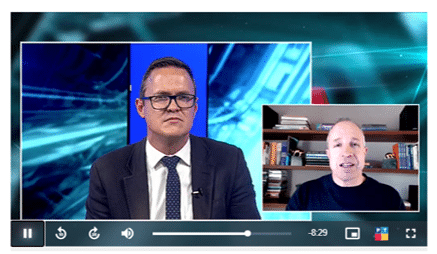
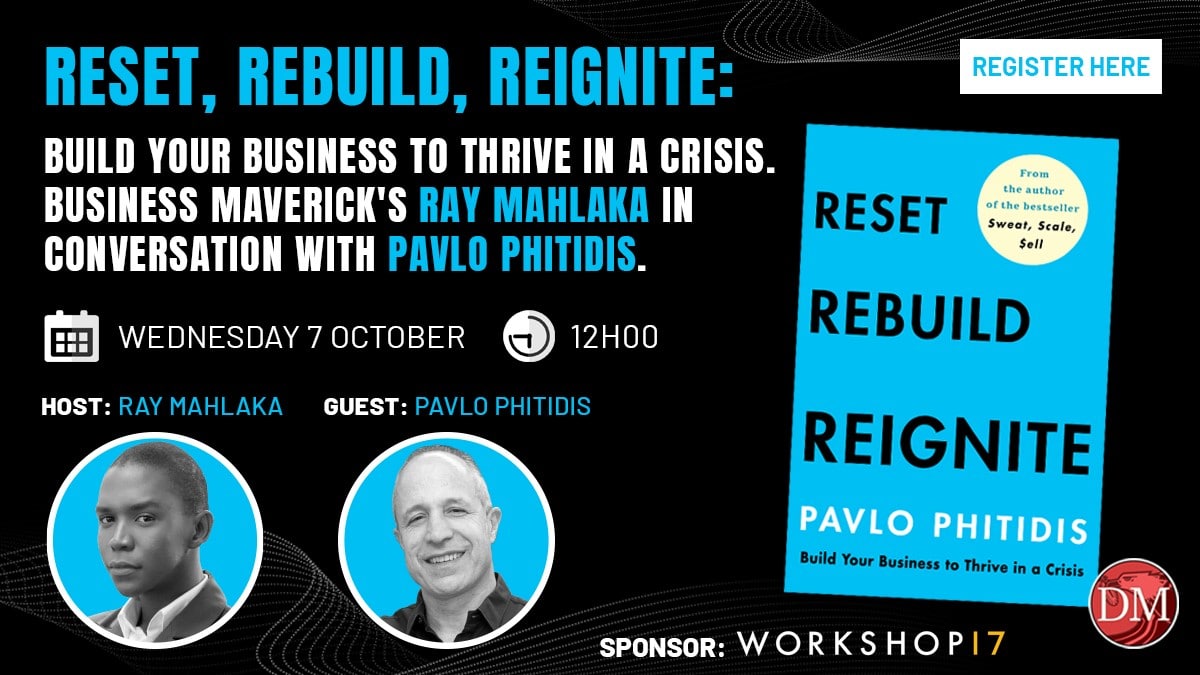
Ray Mahlaka from Business Maverick read Pavlo Phitidis’ book: Reset Rebuild Reignite with a pad of post-it notes to mark the places he wanted to discuss with Pavlo in this online book review hosted by Daily Maverick. From his reason for writing the book, to tackling specific guests’ questions, Ray and Pavlo covered a lot of ground in 60 minutes. Watch it here:


turnaround

HOW TO TURN A STRUGGLING BUSINESS AROUND

Turning a struggling business around isn’t easy, but it’s not impossible. Currently, many businesses are implementing turnaround strategies to revive ailing operations, or increase their attractiveness to customers. If you’re facing a dead-end in your growing business, on The Money Show with Bruce Whitfield, we considered ways you can turn your business around:

Getting your business back to profitability can’t happen overnight, but it is possible to do when you follow a robust plan. It happens to all businesses.

Whether your company is struggling or not, however, you should undertake an annual review of your operations, to see where your operations can be improved, or new avenues for income generation uncovered. Pavlo recommends this five-step plan:

1. LOOK INSIDE YOUR BUSINESS

Start within your company and make a concerted effort to weed out any internal wrongdoings. The moment you remove anything that’s not supposed to be there, you’re ensuring that your internal systems are running effectively and efficiently, putting your business immediately ahead. With our client, our first step was to walk through the factory floor, and talk to his staff. Alarmingly, we discovered that the factory teams had never met any member of the senior management team before. As the client was looking to turn his newly purchased business around, this was key focus area for him, going forward: your team is a vital component of your company – talk to them. Just by talking to the factory floor staff, we learnt so much, and some great ideas for changing things up were shared.

2. LOOK OUTSIDE YOUR BUSINESS

Next, we headed out and visited this manufacturer’s customers. Customers really do hold the key to your business, and simply by listening, you’ll learn the most remarkable things about how your business is perceived and supported. Notably, when we implemented this step for my client, we also learnt that no member of the senior management team had ever visited their customers. Obtaining an objective perspective on your business is critical, no matter what.

3. LOOK AROUND YOUR BUSINESS

Your suppliers are another key component, who can also give you remarkable insight into your business. Interestingly, we discovered that there are two types of suppliers for our client – the more attentive, smaller, supplier who was eager to grow their relationship with us, and the more aloof, larger, supplier, who was quite comfortable in their relationship with us. As a result, when we reconfigured this clothing manufacturer’s business, we sought out dynamic suppliers who could offer us multi-purpose technologies that streamlined the business’ operations.

4. GO BACK INTO YOUR BUSINESS

Once we’d learnt everything we could from suppliers and customers, we went back to the staff, to share with them our proposed turnaround strategy. It was vital that the employees of the business could see how their ideas had been considered and adopted. After all, its they who ultimately implement the strategy. But the toughest step of all will always be: finding the money.

5. VISIT THE BANK AFTER VISITING A FUNDER

To implement a turnaround strategy, you need capital, and to get a capital investment, you’ll need a funder, or help from your bank. When you talk to your bank about implementing a turnaround strategy for your business, make sure you first have a funder – preferably, someone with an entrepreneurial leaning. That way, if your bank isn’t able, or willing, to provide the capital you need to turn your business around, you’ll still have an independent funding source to get started, and your bank may view your strategy a little more confidently.

Let Aurik help you create and implement a turnaround strategy to get your business back on track. We’ll help you build your business into an asset of value, with funding accessible through Aurik Capital.

suppliers

Focusing on suppliers with an entrepreneurial mind-set pays dividends

Being entrepreneurial is a way of life. It’s not lived in moments and it’s not curated. It’s about being always ‘entrepreneurially-on’! Since a fact of life is that nothing remains as it is and change is always happening, being entrepreneurially-on allows you to be present in the change and find opportunity.
Customer Relationship Management (CRM) is a key business activity that occupies a large share of mind in any business. It leads to upselling, cross selling, inside selling and all the forward momentum that any business can hope for. Supplier Relationship Management (SRM), the yang of CRM’s ying, is seldom spoken about goes beyond quality and price. The supply-side of your business carries with it as much risk and reward as the demand-side and yet how much do we really know about our suppliers?

A case study

Pierre certainly is ‘entrepreneurially-on’. As a romantic and he loves his wife, his first love is concrete. On a trip to Paris, France a number of years ago he was photographing his wife with the Eiffel Tower in the background. Beyond the romantic sentiment of the occasion, through his camera lens, Pierre saw a shape that could innovate the retaining walls and structures for the mining, agricultural and materials handling sectors. His mind swirled with what this shape offered.
No sooner had he arrived home in South Africa, Pierre went on to develop a series of concrete retaining walls in the shape of the Eiffel Tower. Today his products stretch across all sectors and the industries within in them. From creating storage capabilities to erecting temporary material depot’s on construction sites, his products look over an abundant horizon of opportunity. With good margins offered by the uniqueness of his patented product, a solid understanding of his customer’s needs, Pierre has grown the business dramatically in the last few years. His order book continues to grow as does his cash in the bank!

A challenge or an opportunity?

A few years back, Gauteng experienced unprecedented rains. The highest rainfall in 14 years impacted many businesses. From a drop in productivity due to power outages, broken traffic lights and an inability to operate outdoors, the construction industry bore a major part of the economic drama. In particular, the materials suppliers to the construction industry forecasts dampened down in the wet weather. In a recent session with Pierre, I could sense that he was frustrated. Laying concrete structures such as materials handling cells, retaining walls, paving and the like is simply not possible in abundant rainfalls. The substrate upon which the concrete structures are laid keep on washing away. Orders were on hand and Pierre was on track to meet his first quarter forecast but sales where postponed for better weather.
To lift the cloud hanging over Pierre’s business meant that we had to look at an ‘entrepreneurially-on’ opportunity. Given the weather conditions that we had no control over, how could we turn this to our advantage? In addition, he had idle cash burning a hole in his pocket. I suggested we turn to SRM and see what was on offer.

Cement manufacturers in South Africa are large corporate businesses. Within these businesses, there are systems and procedures. With active shareholders always seeking returns, these businesses are governed by extensive revenue forecasts demanded by shareholders. Sure, one can blame an Act of God for non-achievement of a forecast but one cannot ever blame inaction and poor imagination. A deepening understanding of the challenges managers in these corporates faced the implications on production efficiencies, jobs, supplier contracts that they had in place and importantly their key-performance-indicators (KPI’s), lent a new insight on how to turn bad weather into sunshine for all.
KPI’s are made up of targets that govern performance in an organisation. Meeting them means you keep your job. Superseding them means a bonus and non-achievement of the KPI’s are frowned upon. In some cases it may mean the corporate manager losing his job! KPI’s are designed to keep any manager thinking about their performance day and night. As we unpacked our suppliers challenges further, we understood that further costs of storage were being incurred deepening the crisis on financial performance of these suppliers. Every occasion that we met with and spoke with the suppliers allowed us to develop a deeper understanding of their business processes and the individuals KPI’s. Our process of SRM was deepening.
Recently, a deal was struck with a supplier of cement. We ran our numbers. Confidence in our sales forecast, the most valuable negotiating aid in any supplier deal, allowed us to commit to big volumes for delivery in two batches. The prices agreed were unprecedented providing Pierre with a massive cost advantage that he had not enjoyed for years. The orders on hand would absorb close to 28% of the cement stockpile. The balance would be absorbed in the next 6 months. In addition, a long term supply agreement was negotiated with price increases based off the recently negotiated stockpile prices. The sun would certain shine on Pierre’s margins for a long while still.

How to apply it in your business:

Being ‘entrepreneurially-on’ and an invested understanding of suppliers through SRM placed Pierre in a position where he could secure a number of short and medium term benefits. These included:

• A smart place to invest spare cash – we learnt what drives our suppliers and through that, when and how the managers operating the supply relationship with us are performance managed. Through this we were able to have quality conversations on how we could help each other. In this instance, Pierre would invest his spare cash into stockpiling cement. His return was a splendid price point that yielded his business and invested cash a return way in excess of any other investment he could have made in the money-market, JSE or bonds. In return, the managers we worked with could move closer towards their targeted sales, reduce the pressure of costs by moving stockpiles from their warehouses and keep the production process going.

• Suppliers are people too and business is about people – even corporate suppliers. Whilst as an entrepreneur operating a business in a concentrated economy like SA where often we are abused by our large suppliers and large customers, there are people behind these functions and they have their fears and apprehensions about their responsibilities in their organisation too. Understanding these fears and apprehensions places you in a position where you can do deals like Pierre when the time is right.

• Think beyond your circumstances – SRM is a valuable tool to make sure that you buy right so that you can sell right. Whilst you may operate a business that sells to a local or regional market, large suppliers are often subject to global issues on a more profound level. Being aware the global issues impacting their business allows you the opportunity to interpret how you can help them whilst they help you.

• Turn combat into collaboration – bridging the formality of a supplier relationship with a corporate supplier means spending time to get to know the organisation, how it works, who impacts the life of your contact within the organisation and how you can make a difference to their performance in your own small way. Replacing the often combative relationship with suppliers which are price oriented into a collaborative relationship driven by understanding will pay dividends.

• Be ‘entrepreneurially-on’ – change is a given. It’s happening right now. Understanding how to capitalise on it and get the timing right is what entrepreneurship is about to a large degree. If you have idle assets in your business right now, think how to use it to secure a lasting advantage for your business.

EVENT: Build your business into an Asset of Value

Join business growth specialist and Aurik CEO, Pavlo Phitidis for a 60 minute interactive discussion around a framework for established business owners to build your business into your greatest wealth-generating asset.

This online session will leave you with practical insights into how you can:

  • Re-shape your products and services for a changed economic environment
  • Re-build dependable marketing, sales and operational systems
  • Focus and empower your teams to ensure performance
  • Spend more time leading rather than doing
  • Reignite your business to grow both revenue AND profitability
  • Exit your business successfully when you are ready

Date: 30 September 2020

Time: 08h00 to 09h00

Register here: https://aurik.com/ab-sa-webinar-30-09-2020/

business day TV

WATCH: Business Day TV interview with Pavlo Phitidis about Reset Rebuild Reignite

Michael Avery from Business Day TV took 30 minutes to speak to author and business growth specialist, Pavlo Phitidis about his recently launched book, Reset Rebuild Reignite.

Watch on to learn why and how Pavlo wrote his second book within 9 months of the first, and why he believes any business can be built to thrive  in a crisis.

https://www.businesslive.co.za/bd/business-and-economy/2020-08-28-watch-building-your-business-to-thrive-in-a-crisis/ 

team

How to rebuild a team after retrenchments

Covid 19 forced many companies to cut costs but cutting their payroll. For many it started by cutting salaries, and then for some, they had to cut the workforce. This was not always managed well and in many instances it has  undermined the trust of the employees towards their employer.

People power a business, says Pavlo Phitidis. The building blocks of a business can be very simple. It’s similar to building a bridge – you can mechanically put each in place build the structure. He sees three critical building blocks in a business:

  1. You need to stand for something: what does your business do, for whom, what problem do you solve for them and why do you matter?
  2. Build the functions of the business into systems: marketing, sales, operations and administration. These systems deliver the promise you make to your customers and clients.
  3. Unless you power 1 and 2 with people, they don’t work

Listen to the podcast of the discussion that Pavlo had with Bruce Whitfield on The Money Show on 702 & CapeTalk about this


Business leaders in the SME space in South Africa have been through the wringer for the last 5 years: Working in a regressive economy, with a government who doesn’t seem to like business or know how to engage us. And then we have been under assault with the unreliable power supply due to Eskom.

When Covid came, SMEs already had thin balance sheets, it felt like the final straw. For many who have been running their own business for 5 or more years, they have become virtually unemployable, and have no option but to make that business work. Covid pushed people into a place of concern and panic, and many behaved towards their teams in a way they may now regret. It wasn’t necessarily deliberate, it was the shock of how Covid disrupted their environment.

There were a number of variations from cutting salaries to advising staff of no pay raises, to trying to make staff look to the upside of not travelling in traffic due to working from home… in all instances, the subtext was that if you don’t toe the line of the new policy  you can find another job, knowing there are very few out there.

Pavlo witnessed many instances where the labour act was not followed. Paycuts were done for some but not all, with no transparency, which breaks the most precious ingredient between the business owner and their team. That needs to be rebuilt now.

While remote working via Zoom and other online platforms enabled work to continue, in many cases it has further broken the connection of culture that evolves in a workplace through daily interactions.

Pavlo hopes that most businesses have reset themselves by now to be relevant to the changed lives of their customers.

There are number of things to do to now to rebuild the people part of the business.

  1. Recognise that you are a leader

When you run your own business, that is what you are: a leader! No-one else is going to lead it whether you employ 3 or 300 people. So you are the one that has to rebuild that trust with your people.

  1. Communicate

If remote working is the new normal, you have to develop policies and systems that allow for effective communication. Pavlo’s advice is NOT to turn camera’s off in meetings – you miss body language and have no idea what people are doing on the other side. It takes all of the human engagement out of the discussion. Use all the tools at your disposal to increase engagement on screen if that is how you are working now.

  1. Start an engagement

Don’t leap into the issue. Start an engagement that will elicit some level of emotion. Pavlo does this often by asking a business owner ‘what inspired you to get into the business’ which removes it from a fix-it type of conversation, to an expressive one. So now ask: What did you do during lockdown? What caught you offguard most? And follow that genuine conversation with: So where are we now?

  1. Set a strategy

While acknowledging that things will change and evolve as we are in uncertain times, the team needs to know there is a game plan, and understand WHY not just how it works and the role that they play in it.

  1. All in it together

Everyone has everything to gain, and everything to lose in the business’s survival and success. Unemployment is going to become even worse in the coming months, Covid is still around, and so people are going to be very apprehensive about employing new staff. If the strategy makes sense, and is consultative with the team, and people get to contribute, which makes them co-creators, this makes them take accountability and responsibility for it.

If you are struggling with a people problem in your business, contact Aurik to get the building blocks right for growth.

Ontbytsake

Ontbytsake interview: Reset Rebuild Reignite

Dawie Roodt from Ontbytsake on Kyknet chatted to Aurik CEO, business growth specialist and author, Pavlo Phitidis about his new book, Reset Rebuild Reignite.

The book shares practical insights and strategies to build a business to be able to thrive in a crisis, and was written during the Covid-19 Lockdown.

The book is available in all good book stores or get your copy online HERE 

HOW TO GET THE RIGHT EMPLOYEES TO BUILD YOUR BUSINESS INTO AN ASSET OF VALUE

Tough economic times mean that unemployment is rife. But, as a growing business owner, you’ve noticed that it seems near impossible to find the right kind of people for your company. Unfortunately, the most skilled and best people often cling to the safety net of their current jobs. As the owner of a developing business, finding the right people, at the right time, to join your company and help it grow towards being an asset of value, is critical.

On The Money Show with Bruce Whitfield, Pavlo talked about the right way to hire the right people for your business:

IT’S NOT JUST THE ECONOMY THAT’S THE PROBLEM

Even though unemployment may be rife right now, that’s not the only concern. Inflexible labour laws mean that it’s difficult to hire and, if things go badly, fire someone if they don’t work well for your business. It’s absolutely vital that the first twenty to thirty people you hire to join your growing business are the right fit, because the wrong hire could bring your company to its knees. Moreover, the urgency behind needing good people for your company could lead you towards hiring the wrong people, by accident.

IT’S DECISION TIME

Choosing to grow your team, or not to grow your team, both bear a cost. If you opt not to hire anyone, you’re not building a business: you’re merely creating a job for yourself. If you choose to hire, you must hire well, and commit to the path of growing your business, because people are an essential element of that journey.

WHAT NOT TO DO

You may be feeling the pressure to hire, but the biggest mistake you can make is to hire someone quickly. Quick hires seldom turn out to be good hires, and a bad hire can derail your business before its even begun to operate properly. Notably too, you shouldn’t hire someone to do a job – you should hire someone who brings skills, a good attitude, and true value, to the systems of your business, while operating within them.

WHAT TO DO

Building your business into an Asset of Value begins by creating the systems that enable its growth. Building that System of Delivery begins with:

  • Knowing why you do what you do: A business that is being built into an asset of value, focuses on securing customers and delivering a service to them, through its systems. A true asset of value knows what business it is in, and exactly who it serves.
  • Knowing your customers’ problems: Your business is defined by your customers’ problems, and its services are built to solve those problems. Knowing, understanding, and responding to, those problems is critical.
  • Creating a system that effectively solves those problems.
  • Employ people to operate systems, rather than doing a job

Once your system of delivery is set up, you can look towards employing people to operate those systems. Creating effective systems, and giving your team well-defined job descriptions, enables them to operate in a manner that’s measurable and motivating. That then goes on to build a positive company culture.

LEARNING FROM MISTAKES

Success teaches us very little, but learning from mistakes is invaluable. Enabling your team to make mistakes, to fail and to learn, is essential. By safeguarding your business and empowering your team to take small steps first, and make small mistakes as they learn, is an imperative. Managing the risk of mistakes will ultimately make your employee, and your growing business, stronger, and better equipped to face future challenges.


succession

Negotiating the family business deal

We received a long email from a listener who is considering going into his parent’s business. He has a career in a different industry but has worked in the family business before. His folks have an option to get external professional management into it, but they are reluctant because it’s part of the family heritage.

Many businesses are considering succession as a strategy to hold onto an asset that makes money and will grow its capital value. Getting this right begins with an understanding of what the deal and the process would be between the founders or parents and successors or kids. These engagements can become extremely emotional and very complicated. The debates often get dragged into the history of the relationship and personalities involved rather than what right is for the business.

Here are two negotiating positions worth considering from either side of the fence. The logic holds for family succession, management succession and new partner formation in existing businesses.

Founders

Founders typically hold some of the following emotional mindsets regarding their businesses.

  • History and story about how they started, the difficulties overcome, sacrifices made and unrealised potential.
  • The social fabric of their lives is stitched from the business and this history. As leaders, which all private business owners are, their status comes from the business and the industry.
  • That they existed and left a mark or legacy becomes a key feature for many founders even though they don’t, won’t or can’t admit it.
  • At the later stages of their business life, the sense of defeat or resignation resulting from fatigue after “years in the engine room” can switch to a new lease on life when they see new energy appear in the business, through a trusted family member or younger colleague.

This makes negotiating with founders tiresome. They sway from resignation to regeneration and from withdrawal to “all-in”. Messages about the intent and the relationship between them the successors can be confusing and conflicting. Navigate them slowly and with empathy. Clarity comes from engagement and time and the process needs patience.

Strategically, the founders need and want the following, even though many struggle to express it:

  • Certainty that their years of sacrifice and hard work will yield a pension
  • Confidence that, in the case of a family succession, the kids won’t reverse the gains and collapse the value of the business, since they have no runaway left to step back in and “fix it” again
  • The relationships they have built and the promises they have made will be honoured by the successors. This is often seen from the context of the strange, usually unprofitable deals done between them and their first customers. It’s also seen through the relationships with suppliers and staff.
  • The successors must, need and should struggle to earn the fruits of the business
  • Control over the money since it’s the source of their retirement

Successors

Successors come into this environment opportunistically or reluctantly.

Reluctant successors either have no other options or are driven by family duty and responsibility. In many cases, the business is simply not saleable, and the founders face a dire economic outcome without the intervention.

Opportunity is often motivated by a respect and admiration of what the founders have built and excitement to be part of the future journey.

If reluctant, the emotional mindset will be governed by impatience and possibly resentment.

If opportunity drives the successor, an enthusiastic mindset and positive approach to learning, engagement and the business sets it for a smoother ride into the future.

Strategically, the successors need and want the following, but may struggle to express it because they are not yet aware of what matters and what doesn’t.

If reluctant:

  • Impatience in getting to the ground and making the changes that they believe will have the quickest impact
  • A view that this is short-term and their objective is to build it and sell it
  • A salary and position that will compensate for the sacrifices made to support the family business
  • Low empathy for staff that have been in the business for a long time and may be part of the problem
  • Disregard for the history whilst focusing on the future alone
  • Getting the job done and minimising sacrifice

If opportunistic:

  • Recognition that you start by sweeping the floors
  • Active engagement with suppliers, staff, customers with a view to learn, earn and attain knowledge and through that, respect
  • Patience with the founders and active engagement to understand the history of the business
  • Immersion in the product and service to deeply and quickly understand it.

Both the above scenarios give insights into the backdrop for negotiations between the founders and successors. Understanding this will ease and de-personalise the negotiation between the parties and open the opportunity to get the relationship built right in service of the business. Either way, the following approach has yielded the most sustainable and successful outcomes irrespective of the nature of the successor – reluctant or opportunistic.

  1. Agree to reset the vision of the business after a 3 to 6-month period of the successors entering the business. Until then, status quo must be maintained.
  2. Agree how the successors will accelerate their understanding of the business to support their contribution to the new vision of the business.

This will provide enough time for the successors to understand the dynamics of the business and environment.

  1. Embark on a facilitated strategy session with a view to include the experience and history of the founders with the new energy, perspective and desires of the successors. It must be facilitated since this will allow all ideas to be ventilated and the parties will feel heard.
  2. Concretise the strategy and vision through a few measurable objectives and actions.
  3. Agree on where to start – it should always be in the market first – and where to end in the collaborative rebuild of the business to meet that vision.
  4. Be very clear on the basis with which control will migrate from founder to successor.

This process will not necessarily defy the fact that 72% of family succession efforts fail. But it improves the chances of success dramatically. Family businesses are clouded by assumption more so than management succession and new partner succession. Families tend to hold fixed views on each other, carry resentment because of history and, if conflict avoiding, rely on assumption in the decisions made in succession.

We work with family businesses across all sectors of the economy. With personal history in this space, we have developed and deepened our interest in how to manage the dynamic and more importantly, establish a structured process of engagement that will serve the businesses first and the family as a result. Should your succession efforts stall, reach out to us and we facilitate the engagement to ensure your business becomes an Asset of Value.

SME matters

EVENT: Market your business to generate revenues

You’ve structured and finally launched your e-commerce website – so what’s next?

Marketing your business to generate revenues needs to become a key element of your strategy today.

If you want to become part of the rising tide of e-commerce success stories, you need to find ways to stand out.

Join business growth expert, Pavlo Phitidis as he chats to a panel of experts on smart marketing strategies that will set your business apart and help you attract customers in the e-commerce space.

Speakers include:

  • Kathryn Sharfman, chief platform officer and chief marketing officer at The Sun Exchange
  • Musa Kalenga, Executive at Bridge Labs, The Brave Group of Companies and African Tech Roundup
  • Aidan Baigrie, CEO at Expert Opinion Md

22 September 2020 from 13h00 to 14h00

Register at: https://bit.ly/3hCrwiV

This is part 3 in a 4 part series on Digitising your Business brought to you by Business Day SME Matters and Payfast.