Tag: Asset of Value

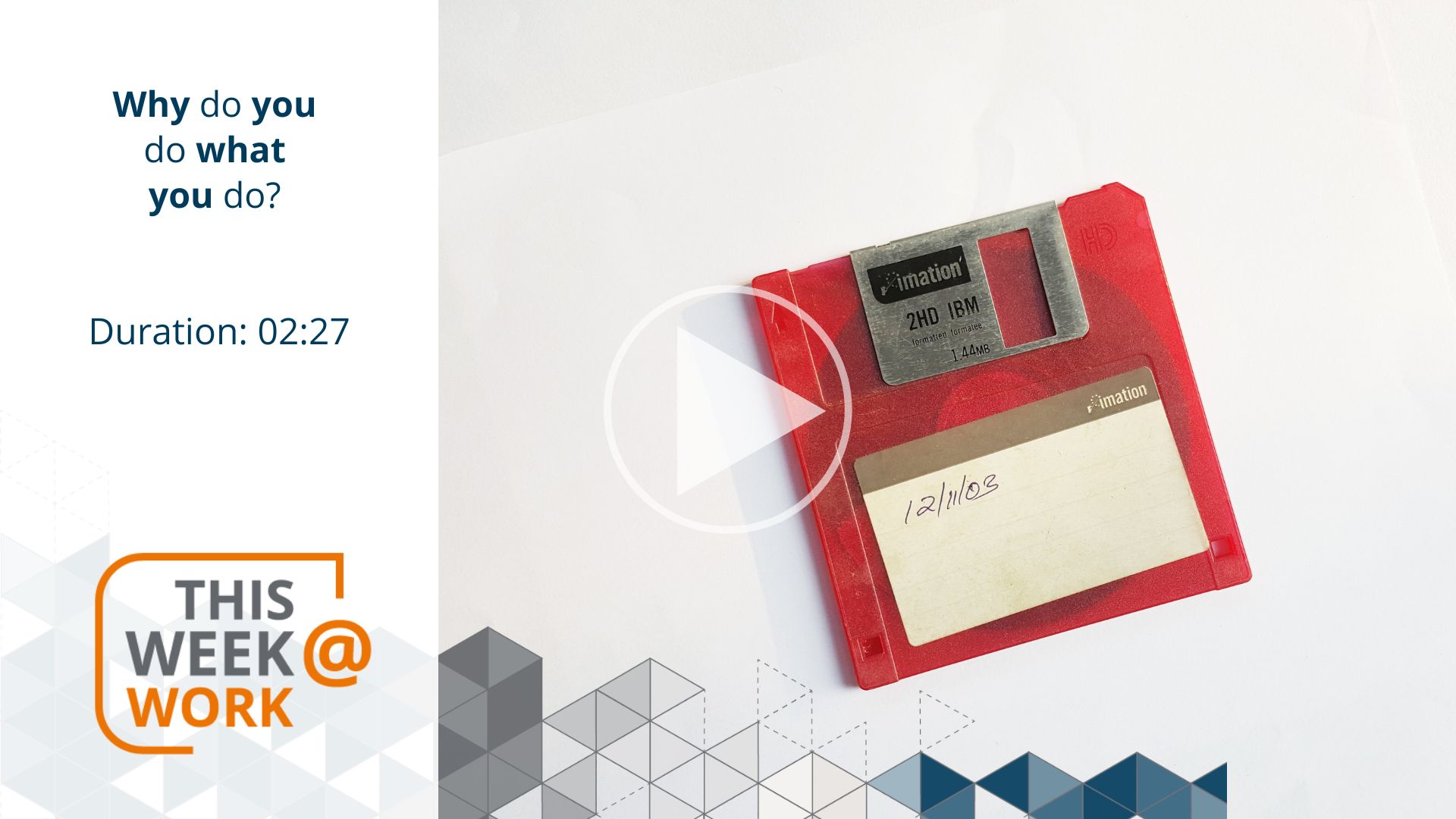
This Week@Work: Why do you do what you do?

This Week@Work: Why do you do what you do?

This Week@Work, purpose is paramount. I visited a successful tea company who now proudly display their original tea sorter (a DIY modified cement mixer!) in their reception area to remind the business about their heritage. In tough times, go back to what you’ve been through and come through to motivate you to get through now, and focus on what needs to come next.

Continue reading

Building an International Brand: Uniting Big and Small Businesses

Building an International Brand: Uniting Big and Small Businesses

In the dynamic landscape of business, building an international brand is a dream for many companies. The potential to see their products showcased on global shelves is within reach, but achieving this goal requires a collaborative effort between big and small businesses. In this blog, we explore the key elements that pave the path towards international success

Unforgiving Consistency – The Cornerstone of Quality:

To establish a brand that transcends borders, unwavering quality is paramount. Customers worldwide seek products they can rely on, and that reliability stems from unforgiving consistency. This means ensuring that every unit leaving your premises meets the highest standards, with no compromise.

Proof – Demonstrating Reliability and Viability:

The global market demands more than mere claims. To conquer international shelves, your products must offer tangible proof of their worth. From functionality to serviceability, from production to supply, your offerings must showcase their capabilities. Providing solid evidence of your product’s performance is what sets you apart from the competition.

Story – Captivating the World’s Imagination:

Amidst the clamour of countless products, stories have the power to captivate and connect. Most brands have a rich tapestry of narratives to tell, stories that resonate with diverse audiences. These stories breathe life into products, forging an emotional bond with consumers worldwide. Embrace the power of storytelling to rise above the noise and create a lasting impact.

Scale – Delivering Beyond Expectations:

Global retailers demand products they can count on – products that can be delivered at scale. Meeting this criterion is essential for gaining their trust and loyalty. Furthermore, financial stability is vital to fund operations and navigate potential stock outs. By demonstrating your capability to scale, you position yourself as a reliable partner for international retailers.

Investment – Dedication that Drives Success:

Building an international brand demands significant investment – not just financially, but also in terms of time, commitment, and passion. Business owners must be willing to invest their heart and soul into this endeavor. Only then can they weather the challenges and complexities that come with expanding on a global stage.

A Challenge for Big Retailers and Dedicated SMEs:

For both established retailers and ambitious SMEs, building an international brand is a collective challenge that can be overcome through collaboration. Here’s a five-step approach to help  embark on this journey together:

  1. Identify Potential Categories:

Identify product categories where your local  offerings have the potential to replace imported products. Focusing on these niches will increase your chances of success.

  1. Set Clear Objectives:

Define the quality, volume, promotion, and pricing specifications necessary to compete with existing imported products. Clarity in your objectives will guide your path forward.

  1. Seek Dedicated SMEs:

Reach out to ten passionate and dedicated SMEs that have the desire to step onto the international stage. Collaborate with these businesses to create a robust support system.

  1. Progressive Contracts:

Formulate five-year progressive contracts with these SMEs. These agreements will enable both parties to evolve and adapt to changing market demands.

  1. Uphold Service Level Agreements (SLAs):

Throughout this partnership, never compromise on Service Level Agreements (SLAs). High standards and consistent delivery are the pillars of success.

Building an international brand is a journey that begins at home. The partnership between big retailers and committed SMEs is the driving force behind achieving this vision. By embracing quality, providing undeniable proof, telling captivating stories, demonstrating scalability, and investing wholeheartedly, domestic  businesses can rise above borders and shine on the global stage.

To listen to to the radio discussion click here

Fuelling Vibrancy in an Economy: Unleashing the Power of Competition, Innovation, Funding, and Talent

Fuelling Vibrancy in an Economy: Unleashing the Power of Competition, Innovation, Funding, and Talent

Discover the key drivers behind a vibrant economy as discussed on a recent Money Show insert with Pavlo Phitidis and Bruce Whitfield. This highlighted the crucial factors of competition, innovation, funding, and talent and their role in shaping economic landscapes. Here we delve into the main takeaways from the show, exploring how individuals and businesses can contribute to building a thriving economy.

Competition Drives Progress: Competition is the driving force behind growth and progress in any economy. When businesses compete, they are motivated to constantly improve their products and services. This healthy competition fosters innovation and encourages companies to develop groundbreaking ideas and solutions that address market needs.

Innovation and Funding for Success: Innovation is the lifeblood of success in today’s fast-paced business world. It requires adequate funding to thrive. Access to capital is essential for businesses of all sizes as it enables them to invest in research and development, upgrade infrastructure, and expand their operations. Adequate funding also plays a vital role in attracting and retaining top talent.

Talent as the Engine of Success: Talent is a critical driver of success for any enterprise. Skilled individuals with expertise and creativity propel businesses forward. Whether large corporations or small startups, attracting and retaining top talent is crucial for driving innovation and achieving sustainable growth. Nurturing talent within an economy is vital for long-term prosperity.

Roles of Different-Sized Businesses:

Understanding the roles played by businesses of different sizes is key to fostering economic vibrancy.

  1. Large Corporations: Large corporations focus on distribution, leveraging their extensive networks to efficiently bring products and services to consumers. Their ability to reach a wide customer base and operate on a large scale drives economic growth and stability.
  2. Medium-Sized Businesses: Medium-sized businesses play a crucial role in new market development. Their agility and flexibility allow them to explore emerging markets, identify untapped opportunities, and pioneer innovative solutions. These businesses drive economic expansion by adapting to evolving market trends.
  3. Small Businesses: Small businesses contribute to the economy through innovation at the edges. They bring fresh ideas, niche products, and specialized services to the market. Their ability to swiftly adapt and experiment fosters diversity and resilience within the business ecosystem. Small businesses often serve as incubators for innovative concepts that can eventually scale up and benefit the broader economy. Building an Economy: Key Insights: The radio show provided valuable insights on building a robust economy. Here are some key takeaways:
  • Take initiative and don’t wait for external forces to improve your circumstances. Start pursuing your entrepreneurial ambitions now
  • Medium-sized businesses are the bridge from the large to small enterprises. They can maintain their agility by embracing smart strategies and leveraging contracting and consulting opportunities.
  • Set a single destination and adopt a focused approach to navigate challenges and seize opportunities. Learn from past experiences, take ownership of decisions, and leverage acquired knowledge.
  • Uphold ethical practices, avoid theft, late payments, and animosity towards competitors. Foster collaboration and continuous learning as part of a healthy business environment.

To listen to the full discussion from the show:

Unleashing Scalability: Driving Sustainable Business Growth

Unleashing Scalability: Driving Sustainable Business Growth

Scalability is not the same as growth. Scalability proceeds growth as it is the process of preparing the business to handle increased workload and customer demands without compromising performance or incurring excessive costs.

One of the best indicators of a scalable business is to see if they grow not only revenue, but profitability too, as their costs don’t rise in tandem with their revenue increase.

To listen to the full discussion from the show:

This Week@Work: Growth is not growth is not growth

This Week@Work: Growth is not growth is not growth

This Week@Work a discussion around acquisitions as a strategy to accelerate growth gave Pavlo an opportunity to explore this idea in more detail.  Several types of growth make up your business growth recipe if you intend to grow revenue, profit as well as capital value that can be realised.

Accelerated growth is one of these, and has a number of elements to it but an acquisition of a business may not be the path to achieving it.

Continue reading

Building While You Fly: Achieving Sustainable Growth for Your Business

Building While You Fly: Achieving Sustainable Growth for Your Business

Introduction: Building a successful business is akin to our personal development journey. Just as we evolve from infancy to adulthood, our businesses must also adapt and grow to support their expanding needs. Relying on the same foundation that launched your business may hinder its potential for growth. To avoid adverse outcomes such as being trapped in the day-to-day operations, losing customers, team members, and suppliers, and stagnant growth, it is crucial to embrace the concept of building while you fly. In other words, as your business takes off, you must continuously improve and upgrade your infrastructure to soar higher and achieve sustainable growth.

  1. Evolving with the Right Chassis: Similar to our musculoskeletal system adapting to support our growth, your business needs a strong foundation that can accommodate its expanding size and ambitions. The chassis that served you well during the initial stages may not be suitable for long-term growth. By recognizing the need for a more robust infrastructure, you can build it out to operate independently of you and thrive beyond your individual efforts.
  2. Escaping the Life of Firefighting: Failing to build while you fly often leaves you in a never-ending cycle of firefighting. You find yourself constantly addressing urgent issues, unable to focus on strategic growth initiatives. By investing time and resources into building a solid foundation, you can release yourself from the daily operational challenges and gain the freedom to concentrate on driving your business forward.
  3. Safeguarding Customers, Teams, and Suppliers: If you don’t evolve your business, it can have detrimental effects on your relationships with customers, team members, and suppliers. As your competitors adapt to changing market demands, you risk losing customers who seek innovative solutions elsewhere. Additionally, without a scalable infrastructure, your team may become overwhelmed, leading to disengagement or turnover. Suppliers, too, may be hesitant to collaborate if they perceive your business as stagnant. Building while you fly ensures that you retain these crucial stakeholders and foster long-term relationships based on growth and mutual success.
  4. Embracing a Virtuous Cycle of Growth: Stagnant growth can create a negative feedback loop, draining your business of vitality and potential. On the other hand, building while you fly establishes a virtuous cycle of growth and confidence. By consistently investing in your business and upgrading its capabilities, you attract the right opportunities and talent, further fuelling your growth trajectory. This cycle fosters an environment of continuous improvement and optimism, empowering your business to reach new heights.
  5. The 9-5 Operation and 5-9 Investment: To successfully build while you fly, it is essential to strike a balance between day-to-day operations and investing in future growth. The traditional 9-5 work schedule may fulfil immediate responsibilities, but dedicating the 5-9 time slot to strategic planning, skill development, and innovation is equally crucial. By allocating time outside regular working hours to invest in your business, you can unlock numerous benefits.

Benefits of Building While You Fly:

Sustained Passion: By embracing the mindset of building while you fly, you remain enthusiastic about your business, constantly discovering new facets of yourself, your industry, and its potential.

Increased Efficiency: Investing time in growth-oriented activities allows you to optimize processes, improve productivity, and streamline operations, resulting in time saved that can be redirected toward expansion.

Competitive Advantage: Remaining proactive and forward-thinking positions your business on the front foot, ready to seize opportunities and adapt to industry shifts, enabling you to attract the right collaborators and stay ahead of the competition.

Sustainable Growth: Building while you fly propels your business toward sustained growth and success, as you continuously upgrade your infrastructure, attract new customers, nurture your team, and forge stronger partnerships. Building while you fly is a critical concept for achieving sustainable growth in your business. By acknowledging the need for ongoing evolution, you can avoid stagnation and unlock your business’s full potential. Escaping the life of firefighting, safeguarding valuable relationships, and fostering a cycle of growth and confidence are the rewards of investing time and resources into upgrading your infrastructure. Embrace the 9-5 operation and 5-9 investment approach, and you will witness your business soar to new heights, driven by continuous improvement and a passion for progress.

To listen to the full discussion from the show:

This Week@Work: If you allow it to rust and atrophy, you’ll not have it when you need it!

This Week@Work: If you allow it to rust and atrophy, you’ll not have it when you need it!

This Week@Work, a rusty bike chain made Pavlo think of Zig Ziglar, who started out as a door-to-door salesperson.

Zig understood the art of hunting for business, something that most business owners have gotten rusty at since we started to rely on digital media to bring business to our door.

Continue reading