Author: Pavlo Phitidis

Pinnacle Stone: Guard the Downside. Open the Upside. Building a Business That Delivers on Time, Every Time

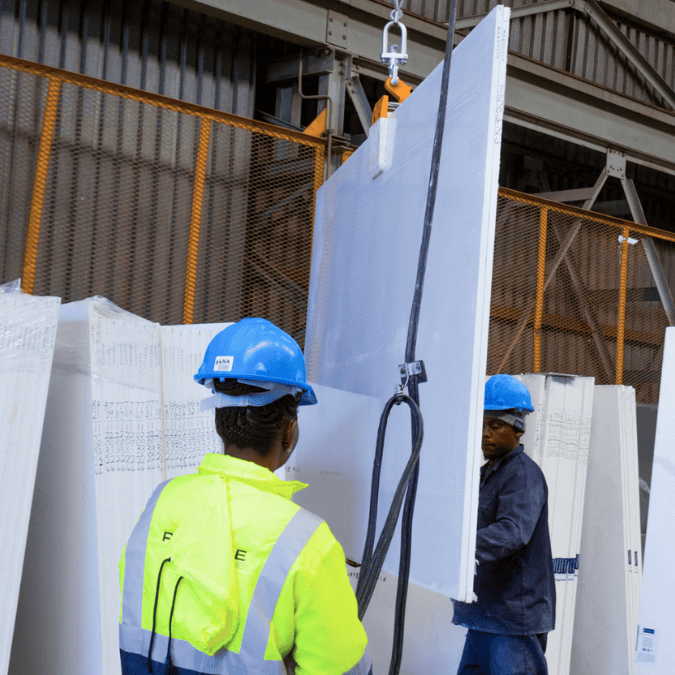
If you’ve ever been involved in a renovation or construction project, you’ll know this: when critical materials arrive late, everything stops.

Installers wait. Deadlines slip. Cash flow tightens. Reputations take strain.

For the businesses supplying these materials, this is not just a logistics issue. It’s a structural one.

Continue reading

Supafoods: Shifting from a supplier to a solution

Based in Umgeni Business Park in Durban, Supafoods has established itself as a trusted manufacturer and supplier within South Africa’s bakery and food supply sector. What began as a modest operation has grown into a fully equipped food manufacturing facility, supplying bakery ingredients to retail groups, independent bakeries and community-based organisations across the country.

Continue reading

This Week@Work: The 5 levers of business valuation

There are 2 elements that go into valuation: The first is the 5 technical levers of valuation which can be built into your business, the other 40% is all about how you strategically exit your business.

Click below to watch as I outline the 5. I have also created blogs based on The Money Show podcasts, which unpack each of these in more detail. Find those here.

Continue reading

This Week@Work: How spending your time in the engine room can devalue your business

This is a cautionary tale about where to focus when times get tough. It’s a story of a business owner who had built a phenomenally successful business, and even had a £9.8M offer on the table 4 years ago! Now, this business has shrunk in clients, revenue, staff, and has virtually no value for a buyer today.

Continue reading

Can remote work sustain, or do we go back to onsite work?

When Covid hit, the world shut down. Remote work became a necessity. Across all business, leaders are trying to evaluate the sustainability of it all.

Listen to the podcast of Pavlo Phitidis discussing this on The Money Show or read on…


In manufacturing it’s less sustainable as the means of production are plant and equipment. Unless its digital production like websites and software or even drafting and product design. The challenge there is the cost of technology to get the job done. Product and trade need people at site to lift, carry, make, pack, send their offerings to their customers. Hard to coordinate remotely with the business centred around a warehouse.

The service industry is where the greatest shift may lie. With people and rent being the biggest fixed operating costs, the motivation to shed the landlord is high. On paper it’s almost irresistible. But what is the cost?

  1. Culture

Beyond a job, beyond a paycheck, why do we work? Hopefully, we find purpose, meaning if we are lucky and a sense of value in that we count and matter to our colleagues and peers.

This manifests in the social elements of the work environment. Laughing at joke, raising eyes or brows at the remark made by a colleague commenting on their kid’s behavior, gossip about the boss’s new shoes, sniggering at the hung-over manager who had a rough weekend. All subtle, all social cues that evolve the character of that company’s workplace, that shape the culture through a series of unspoken rules of engagement beyond functional work ethics and norms. Playing, humoring, charm, interference, irritation, and celebration add further to the social environment, mimicking the character of the boss or managers or outspoken characters that every business has.

How does it work in the cold hard stare of a screen, cameras off, staccato communications, tones unattached to facial expressions and body language? It’s hard to get right. What does it say when your employees don’t want to come back…or do? Might this be the truest reflection of your company’s culture.

Culture is vital to create meaning and value beyond function. Work is a social engagement and the extent to which it can happen, how it happens has a tremendous impact on the wellbeing, happiness, and engagement of your team. This in turn impacts productivity, performance, and innovation.

  1. Innovation

How, where, and when does it occur?

A sales rep or BD comes back from a client engagement and needs to talk about the meeting. They had an epiphany moment, and the client is asking for a service that needs discussion. Getting it right gets the deal and might open a new market or competitive edge.

Operations is struggling to service a client’s expectations. Scope creep, eroding profit and time is moving out of control. The client is important, so is the time and budget driven project plan. Who has the relationship with the client to sort it out and who can ask?

An insight to a workflow comes to mind. The opportunity to improve a system is real. Quickly gathering a few colleagues in front of a white board to map it out makes it happen.

The impromptu nature of these engagements is lost and with that comes a cost.

  1. Problem Solving

In the flow of work, a problem arises. Leaning over the workstation or stretching across the desk, asking a colleague how to resolve it or whether they too have it is lost. How do we quantify that cost? Is it a function of time or worse, will it be ignored and what then follows on from it?

  1. Negotiation

How do you engage in a negotiation across a screen? Negotiation relies on cues, expressions, tone, body, and face language. Measuring its intent – taking a chance to being deathly serious – is normally understood through these human cues. How do you get it done with cameras off? And if the cameras are on, how much can you read beyond the words being spoken, losing out all the other cues. Getting it wrong comes at a cost and we have not yet begun to understand it.

  1. Ethics

How do figure out what’s right and what’s wrong in terms of behavior and practice. Would asking suggest you don’t know and what then would the company think of your question, answer or behavior. Especially if you are a new employee, who can you observe or ask casually at the coffee station or water cooler?

  1. Onboarding

Securing and onboarding future talent is particularly hard. Whilst it is the norm in multidisciplinary software projects, it is not in the everyday functions of a services business. How do you induct new recruits into the social dynamic of a business and weave them through the fabric of how, who, what makes the business work…beyond the function of their job? The goal driven and focused screen engagements get them only so far!

  1. Performance

Can you measure your team’s performance? What if you have a bigger team, can you still? How do you measure performance? The great majority do so through activity and action. Very few businesses have systems to measure through output metrics. Logging onto the ERP or CRM and then logging off 8 hours later does not mean 8 hours of work was done!

  1. Team

How do you build a cohesive team? Especially true in the age-old battle between sales and ops. Tensions arise as sales ‘over sell and promise’ when ops ‘underdelivers to the client expectation’. Teams form, battle lines are drawn, managers resolve, learnings are gained and the physical engagement around it matters deeply. A great client meeting from an enthusiastic BD cannot be shared as she triumphantly walks into the office; the ring of a bell on a deal done is heard by nobody, a problem solved in administration is respected by no one. Team is built through the multiple, small, seemingly insignificant actions that create alignment, coherence, and loyalty. Is there a cost to not, having it?

We don’t know until we do. Understanding and interpreting the interactions between people is a dark science. Hard to measure, hard to notice often, hard to put a value onto until one day, things are different and not for the better. Truth is found in action and already some of the biggest service companies in the world are telling their team to come back to the workplace – Apple and JPMorgan count in amongst them. Why? And especially because they have worked remotely for years, well before the pandemic. Already, hybrid models are forming. Services organizing and reshaping to accommodate hybrid models are burgeoning as the race to find what works best is still to be seen!

Pivot

The art of a pivot

Pivoting is a jargonized word for resetting your business to be relevant. It’s used extensively in the start-up world and has become a buzz word as a response to the crisis wrought upon all businesses during the 2020 covid nightmare we have all lived through.

Why, when, and how do you do it as an established business? Listen to Pavlo Phitidis discuss this on The Money Show on 702 & CapeTalk:


Why?

To survive or thrive requires to you to be constantly adapting and adjusting your business. It’s a natural outcome of growth as well as a response to a change in the status-quo.

When?

When you face a threat or opportunity, an entire reset of your business, or part reset is a highly likely outcome. We call it the break-build period and it’s often the outcome of next-level-growth. When under threat, it’s driven by necessity to survive. A threat changes the status-quo of your and your clients/customers world. Persisting with a business-as-usual approach reduces your relevance and value to your customers….and that can be your death knell.

How?

Start with defining your value stack

This includes all your tangible and intangible assets, relationships and insights, sector knowledge and foresight and personal attributes.

Then peel your onion

Using the onion peeling method, you can allocate and categorize your value stack into the 3 layers of core-strategic, non-core-but-strategic and non-core-non-strategic.

Generate a cashflow forecast

Cash is king, preserve it, build it, hold onto it and invest it only to accelerate the generation of it until things stabilize.

Do not raise debt!

Finally Reset, Rebuild and Reignite

Reset is a re-definition of your value from the experience of your customer.

Rebuild is the ‘reconstitution’ of your business model and operating activities to create scale in your reset business.

Reignite is accelerating your growth through acquiring the customers, stock, plant, equipment, talent etc. of your competitors who have failed to reset and are losing their relevance and revenues.

resilience

BUILD RESILIENCE INTO YOUR BUSINESS TO TAKE CONTROL OF YOUR FUTURE

We often hear about being resilient to thrive and survive in business today. Why does this matter and what does it mean?

The pace of change driven by fragmenting political and economic ideologies, changing socio-political environments, accelerating access and advances in technology and increased competition is happening faster today than before. And this was before Covid dramatically shifted and accelerated change across the globe.

Staying relevant in this changing world is vital to ensure a future for your business. Think Kodak. One day they dominated, the next, gone. Think Nokia, BlackBerry, Sears, Studdafords, Commodore Comp and the list goes on! We know this, yet, every day I see established businesses facing similar fates.

On The Money Show with Bruce Whitfield, Pavlo Phitidis outlined how to build resilience into your business.

WHY DOES IT MATTER?

If you don’t get this right, your business will die. A business that is not growing is a business dying. Sure, one can blame a multitude of factors from the no-growth economy, aggressive anti-growth legislation and government policy, scarcity of funding and so on. Yet, in the exact same environment, businesses like yours are growing.

To not be relevant in the changing environment stalls growth and retards it generating a fateful future. Without growth you have a business that is hard to sell and further, you will not attract talent, new customers or funders compounding your no-growth scenario and blame.

Your years of sacrifice, investment and risk must turn into a successful exit and capital gain. That is your final reward and it is the pension that you need to care for your family and self.

BEING RESILIENT IS NOT ENOUGH

Most of the content on resilience focuses on human behaviour and psychological analysis of top-level sports people or rough and tough specialist soldiers. There is great value and inspiration in accessing this content. But reading it does not make it so. The human behaviour piece of resilience takes specific experiences, time and pain. Without it, you will suffer. But with it, you are only partly there. Resilience can be built, through design, into your business. When you tire from the ceaseless fight, when you fatigue from the constant assault on your business and future, you need your business to have resilience “baked-in” through its design and method of build.

BEING PROBLEM AND EXPERIENCE ORIENTED IS THE SEED TO RESILIENT DESIGN

Today, customers buy experiences that solve their problems. Being clear on who your customers are and what problems you solve for them is the single most important factor in designing a resilient business. Beware to let your product or service guide your business design and mindset. This means that your eye, ear and heart are all focused on the product and its features when in fact, the market is buying solutions to problems and experiences. Remaining “tuned in” to your customers and responding fast to their changing world builds a resilient business.

To get a clear message from the market, a resilient design is one in which the business does not try to offer everything to everyone. Resilient design means being super-focused, niched, a specialist in both the product or service you offer, as well as the customer groups you target and serve. It remains the single most challenging thing to get right.

INFORMED DESIGN LED BY YOUR CUSTOMERS

With clarity at hand, resilient design means that every activity in your business is developed to market, sell, deliver and enable response to that well-defined customer group. These systems need to orchestrate and act to create the right pitch and melody that your customer will hear and resonate with. Get the melody wrong, that customer switches channel or skips to the next tune on their radio. Get it right, and that customer will stick and stay. They will also lead the development of your business into the future. As their world changes, you will be able to understand what that means. That understanding leads to your actions leading to the investments and changes you make in your business to respond.

STRUCTURE DETERMINES BEHAVIOUR

Designed resilience means a team that is tuned into that customer and their changing world. In a service business making each and everyone’s bonus or incentive structure linked to customer experiences is a lot easier than in a product or manufacturing business. You may not like a member of your team but if your customers rate them well, they’re an asset and key tool to the resilience of your business. Remember, structure determines behaviour. Incentivise people against a structure that ensures resilience and responsiveness, and they will be true assets to the business.

RESILIENCE ATTRACTS GOOD COMPANY

It’s not simple to get right. It’s harder when you’re established. Without this design baked-into your business, it’s all up to you, 24/7. With this design in play, your efforts will act to deepen and ensure that the success you enjoy today, will be the success of tomorrow. Funders love it, buyers even more and your employees will thrive on it. Finally, your reward will be greater than you could ever dream of.

LET’S WORK TOGETHER

We work with established business to get to the next level of growth and value. That means resilience is baked-in, built-in and an absolute necessity in how we work with you. Get in touch and let’s ensure that your future remains brighter than your present day.